



New here? Sign up to receive Boundless in your inbox every other Sunday.
Previous issue: what art is actually doing.
Today we follow 400,000 native plants on an unlikely journey from the North Dakota Badlands, to a nursery in Wisconsin, to the roof of a presidential library. One of the cornerstone elements that separates this project from all others.

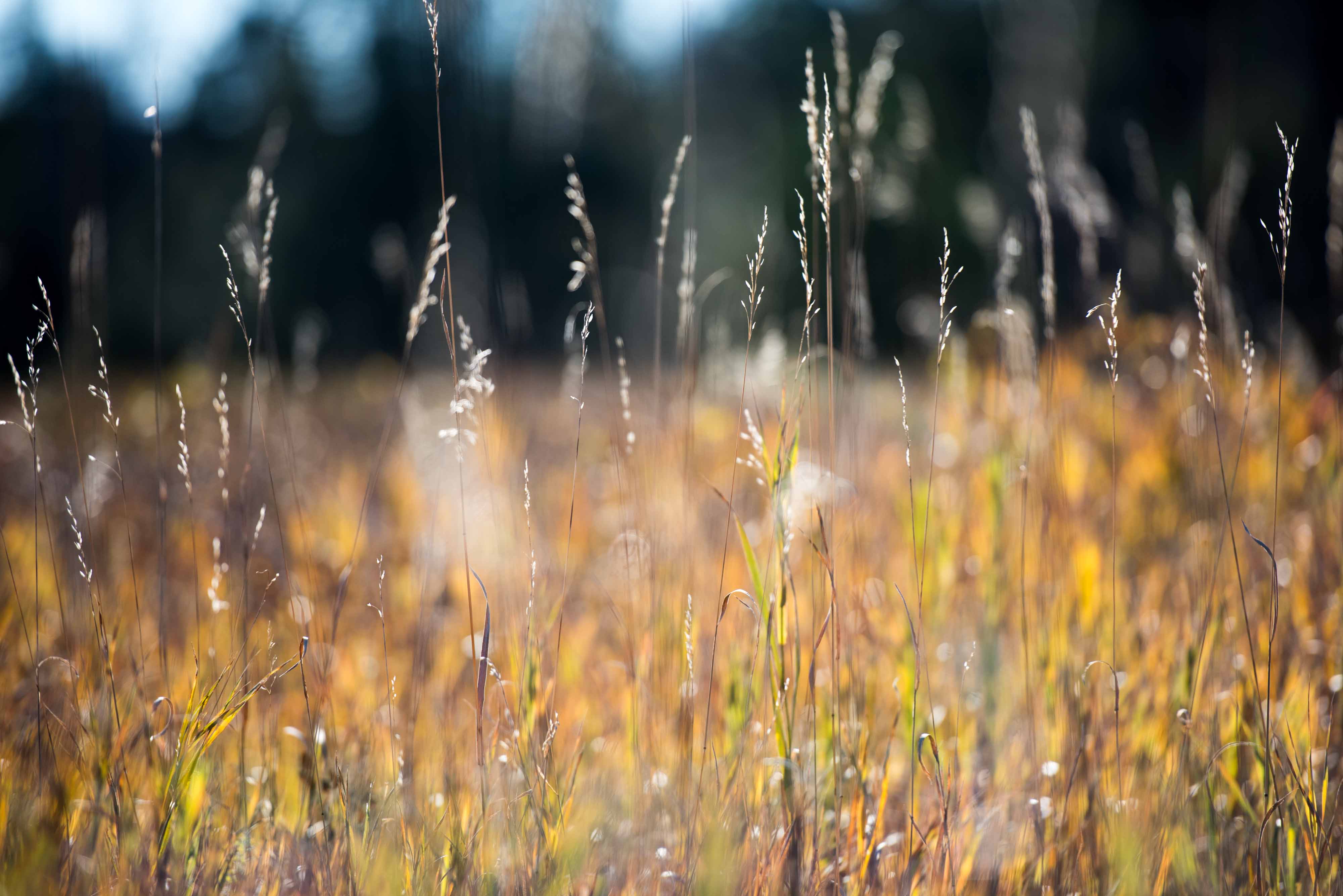
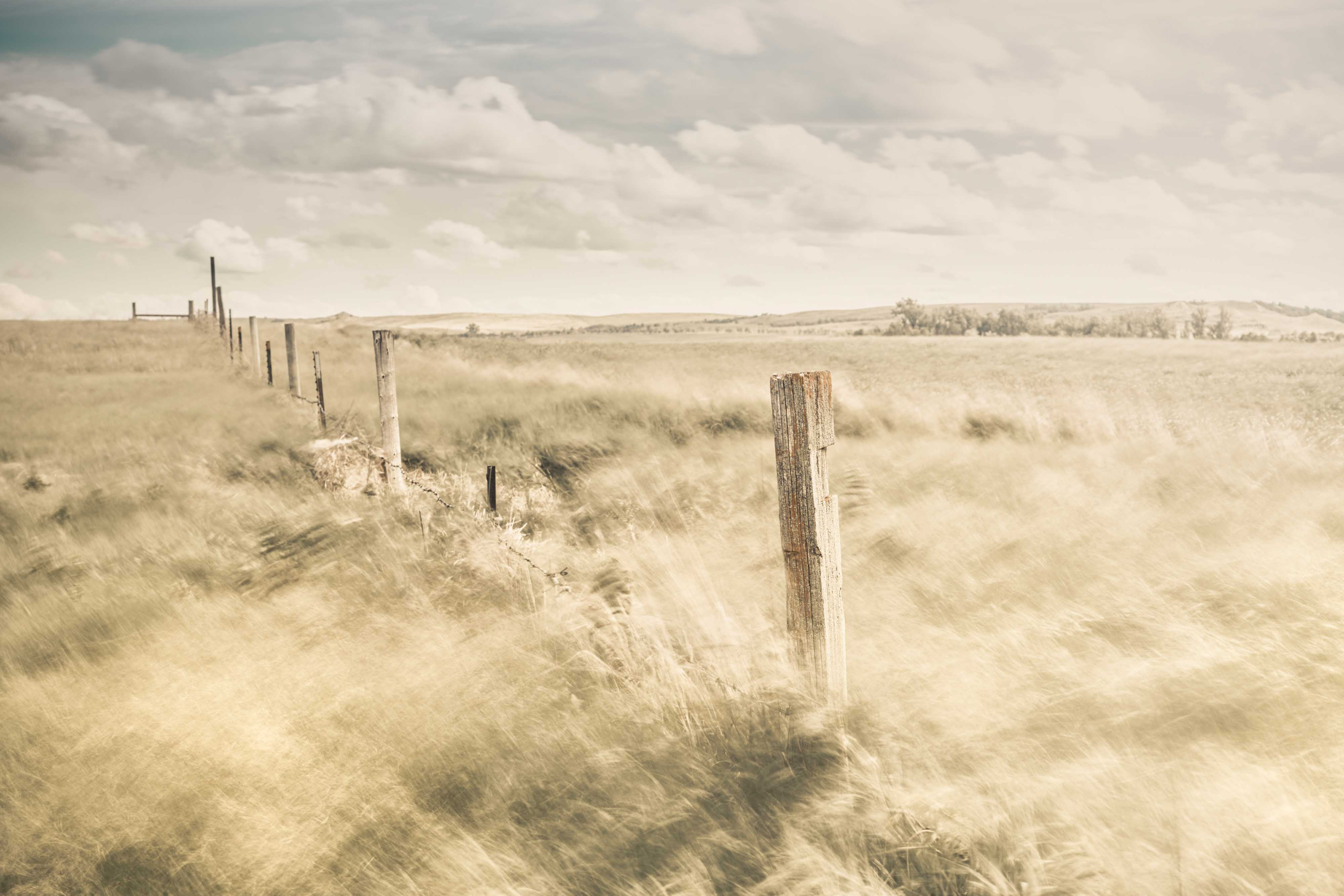
Prairie grasses near the Elkhorn Ranch, the land Theodore Roosevelt considered his home. North Dakota, 2023. All images © Chad Ziemendorf.
What the Land Already Knew.
Before a single architect arrived in Medora, before a shovel broke ground, this landscape had already been doing something extraordinary for generations. The grasslands of the Little Missouri watershed, the same ground TR rode across on horseback in the 1880s, represent one of the most biologically complex ecosystems in North America. And one of the most endangered.
The American Prairie is the most threatened biome on the continent. More than 70 percent of the original Northern Great Plains grasslands have been lost to development, agriculture, and invasive species. What remains is fragmented, and the plants that define it, the native grasses, forbs, and wildflowers adapted over time to this specific soil and this specific climate, are increasingly hard to find in the wild.
The Theodore Roosevelt Presidential Library was always going to sit in this landscape. The question was whether it would simply coexist alongside it, or actively work in concert with it.
The answer is one of the most ambitious ecological restoration efforts ever tied to a building project in the American West.

Martin Construction begins moving earth at the library site. Medora, North Dakota, 2023.

The living skin of the prairie, decades of accumulated organic material, microorganisms, and root systems, being carefully preserved rather than discarded. Medora, 2023.
The Dirt You Already Met.
If you've been reading since the early issues, you might remember Boundless 00002, the issue about dirt. Not dirt as a construction waste problem, but dirt as a living asset.
When Martin Construction began site work in 2023, their first task wasn't to excavate and haul away. It was to scrape and stockpile the native topsoil with the kind of care a surgeon gives to tissue that will be needed again. Over 90,000 cubic yards of earth moved, but the living layer on top was preserved separately and set aside.
Months later, that same topsoil would return to blanket the library's living roof: two acres of rooftop, 15 inches of soil depth, specifically engineered to support what was coming next.¹
You can't grow a native prairie on a construction roof without the right foundation. The dirt issue wasn't just backstory. It was the prerequisite.

Amy McCann, Community Relations Director for the TR Library, guides volunteers including JLGers Josh Kehrwald, Jim Galloway and Beau LaCroix, through identifying viable seed species during a morning collection session near the library site. June 2023.
Before There Were Plants, There Were Seeds.
The seed collection effort had been underway for some time before this particular morning. RES personnel, and Nate most of all, had been moving through the grasslands near the library site and out toward Elkhorn Ranch for weeks, identifying viable species and harvesting seeds by hand from 63 native plants growing in the wild. It was patient, unglamorous fieldwork, and it was the foundation everything else depended on.
On this June morning in 2023, Amy McCann gathered a group of volunteers to participate in the harvest firsthand. Some were JLG architects. Some were staff from TRPL and some from Confluence. Getting everyone involved was intentional. There's a difference between working on a building and kneeling in the grass where it will stand, holding the seeds that will eventually cover its roof. Amy understood that.
These weren't seeds from a catalog. They were genetically local, adapted to this specific soil, this specific latitude, this specific rainfall pattern. You can't replicate that in a lab, and you can't order it online.

Seeds freshly harvested from native species near the library site. Their genetic lineage is local, adapted specifically to the soil and climate of western North Dakota. June 2023.

Volunteers spread across the grasslands near the library site during seed collection. The buttes of the North Dakota Badlands rise in the distance, the same landscape TR crossed on horseback in the 1880s. June 2023.
The effort was spearheaded by Resource Environmental Solutions (RES), the ecological restoration firm brought on as a key partner for the project. Their team spent days and weeks in the field, not just around the library site but out near Elkhorn Ranch, the remote property where Roosevelt built his second ranch and spent the most formative years of his Badlands tenure.
Snøhetta's Matt McMahon, who was part of the seed collection effort himself, put it plainly: "Almost everyone on the design and owner core teams has spent time doing seed collection out in the Badland landscape. This connects us all to this project and place in a deep and personal way."²

Cleaned and labeled seeds organized by species, resting on the architectural model Snøhetta designed for the library. Each bag represents weeks of fieldwork. Medora, 2023.

Staff and architects examine the harvested seeds up close. For many of them, the seed collection process was their most direct connection to the land the building would inhabit. Medora, 2023.
Sorted, Cleaned, Catalogued.
Once collected, the seeds were sorted, cleaned, and catalogued: organized by species, labeled, and stored before the next phase of their journey could begin. The images above tell a quiet story. Seeds resting on top of the architectural model Snøhetta built to visualize the library. The building as concept. The seeds as the living reality that would one day cover it.
Enjoying this? Boundless is a free weekly newsletter delivering behind-the-scenes documentation of the Theodore Roosevelt Presidential Library, plus reflections on what vast landscapes teach us about peace, resilience, perspective, and renewal.
Subscribe here → to get the next issue delivered to your inbox every Sunday.

RES workers use a specialized vacuum tray system in which suction holds each seed in position for precise placement into growing trays. Broadhead, Wisconsin, May 2025.
Two Operations, One Goal.
While the seeds were being collected in North Dakota, the cultivation effort was already being organized across two separate operations hundreds of miles away. Each one was essential, and each one was running in parallel.
The first (mentioned earlier) was at RES's nursery in Broadhead, Wisconsin. The second was at the NDSU Hettinger Research Extension Center in western North Dakota. There, range and wildlife scientist Dr. Ben Geaumont had been working quietly since 2022. His role was to propagate native species into seedlings specifically for the library project, with a focus on species where wild collection alone couldn't yield enough volume to meet the roof's demands.
By 2024, Geaumont's team at Hettinger had received two cohorts of plants from RES, totaling over 60,000 seedlings across more than 30 native forb and grass species. They hand-weeded. They irrigated carefully through western North Dakota's dry summers. They grew seeds into plants strong enough to produce more seed, building the supply chain from the ground up.
Amy McCann described his contribution directly: "His tireless efforts, planting, weeding, harvesting, bring our restoration vision to life. By collaborating with the library and contractors, he is not only growing local genetic material that is not commercially available elsewhere but also cultivating a lasting legacy of sustainability and ecological balance."³
That last phrase is worth sitting with: local genetic material that is not commercially available elsewhere. This wasn't just about growing plants. It was about preserving something that exists almost nowhere else.
I haven't made it to Hettinger yet to photograph Dr. Geaumont's operation firsthand, but it's on my list. His work deserves its own visit, and its own images.

Seeds being spread into growing trays at the RES nursery in Broadhead, Wisconsin. Each species gets its own tray, carefully labeled and tracked through the growing process. May 2025.

Nate, RES's lead on the TRPL native plants project, shows me one of the refrigerated storage racks where trays are held at precise temperatures to optimize germination rates. Broadhead, Wisconsin, May 2025.

Overhead view of healthy plug trays growing under greenhouse conditions at the RES nursery. Each tray contains a single species, grown to ensure the strongest possible root systems before transplanting. Broadhead, Wisconsin, May 2025.

Nate walks between rows of trays kept outdoors. Species that thrive with natural light and temperature variation are hardened outside rather than raised in a greenhouse. Broadhead, Wisconsin, May 2025.
The Nursery in Wisconsin.
At RES's Broadhead nursery, the operation was remarkable in its precision. Seeds were planted using a specialized vacuum tray system with suction holding each seed in exactly the right position for placement. Different species were assigned to different growing environments: some to custom greenhouses, others outside, depending on what each plant needed to thrive.
Nate, RES's lead on the TRPL project and the person most responsible for the physical execution of this effort, spent weeks at a time managing the growing process. He was in the field in North Dakota for the harvest. He was in Wisconsin for the cultivation. He would be back in Medora for the planting. More than any single person, he carried this project from seed to soil.

Workers hand-weed each individual tray at the RES nursery. With hundreds of thousands of plugs to cultivate, this kind of attention to detail at scale is what separates a successful restoration from a failed one. Broadhead, Wisconsin, May 2025.

Nate applies root starter before planting individual stalks, a step that improves survival rates during the critical establishment phase. Broadhead, Wisconsin, May 2025.

Nate walks me through the different sections of the nursery, each designated for a specific phase of growth or a specific set of species. The organization required to manage this many variables across this many plant types is extraordinary. Broadhead, Wisconsin, May 2025.

The preserved native topsoil, the same soil scraped and stockpiled by Martin Construction in 2023, returns to the library's roof. Medora, North Dakota, 2025.

Workers spread and level the soil across the rooftop structure, building toward the engineered 15-inch depth that will give the native plants the root space they need. Medora, 2025.

The living foundation of the native plants project taking shape: the rooftop soil layer that connects this building, literally and ecologically, to the ground beneath it. Medora, 2025.
Meanwhile, Back in Medora.
While the plugs were growing in Wisconsin, the roof was being prepared to receive them. The topsoil that had been stockpiled since 2023 was now being lifted and spread across the rooftop structure, 15 inches deep across two full acres, engineered to hold water, support root systems, and give the coming plants the best possible start.
Two years of preparation. Two operations running simultaneously across two states. All of it pointed toward a single moment in June 2025.

Aerial view of the completed soil layer on the TR Library roof, May 2025. Two acres. Fifteen inches deep. Ready.

RES workers in Medora begin the process of rearranging plug trays before planting. The plugs arrived from Wisconsin organized by species, but a real prairie doesn't grow that way. June 2025.

A clipboard detailing each species and which tray position it belongs in: the blueprint for predictable randomness. The goal was to mimic the natural, seemingly accidental distribution of the Little Missouri grasslands. June 2025.

Workers curate the final tray arrangements before transporting them up to the library site. Every decision intentional. Every arrangement designed to look undesigned. Medora, June 2025.
Predictably Random.
When the semis rolled into Medora in June 2025, carrying hundreds of thousands of plug trays from Wisconsin, the plants couldn't simply be unloaded and installed in the order they arrived. At the nursery, each tray had been grown by species: orderly, efficient, consistent. But that's not how a prairie works.
Prairie plant communities are complex, interwoven, and beautifully unpredictable. Certain species grow together. Others compete. The distribution across a healthy grassland looks random to the untrained eye but follows ecological logic accumulated over thousands of years of adaptation. To install the plugs in nursery order would produce something that looked planted. The goal was something that looked alive.
So before a single plug went into the ground, RES workers curated new tray arrangements, consulting species lists and following a blueprint for predictable randomness designed to mirror the actual plant communities of the Little Missouri grasslands. The clipboard in the image above is the unglamorous evidence of that extraordinary attention to detail.

A top-down view of a completed randomized tray with multiple species distributed in patterns that mirror natural prairie. This tray will become a small patch of the living roof. June 2025.

Workers begin installing plugs on the library roof using specially designed plywood guides, pre-drilled with equally spaced holes to ensure uniform planting density across the entire surface. June 2025.

One hole. One plug. The work is methodical and physical, covering two acres of rooftop one plant at a time. June 2025.

The scale of the effort becomes visible here: teams of workers moving across the rooftop, each responsible for a section, each following the same careful process. June 2025.
One Hole, One Plug.
The planting itself was as physical and deliberate as everything that preceded it. Workers moved across the roof using specially designed plywood guides, pre-drilled with evenly spaced holes to ensure uniform planting density. One hole. One plug. Two acres. 140,000 plants on the roof alone.⁴
Amy McCann, who had been part of this project since those misty mornings harvesting seeds in 2023, was out on the roof planting alongside the RES crew. There's something right about that.
Jenn Carroll, the TR Library's Manager of Sustainability, framed the whole effort: "With T.R.'s history being the conservation president, we felt like continuing that legacy was extremely important for our mission."⁵
On the roof that June, the legacy was going in one plug at a time.

Amy McCann, who has been part of this project since the earliest seed collection days in 2023, gets in on the planting alongside the RES crew. June 2025.

Sunrise over the library roof, July 2025. A month after planting, the plugs have begun to establish and the first green is softening the brown substrate. The building starts to disappear into the landscape.
The Long Wait.
A month after planting, the roof was beginning to change. The plugs had taken to the soil, roots reaching down into 15 inches of North Dakota earth, the same earth that had been stockpiled and waiting for two years. The July sunrise image above is a quiet favorite. Not dramatic. Not monumental. Just evidence of something alive doing what living things do.
Then the July rains came.

August 2025. Two months after planting, the native plants are thriving across the library roof: grasses filling in, flowering species blooming, the roofline beginning to blend into the surrounding Badlands plateau. The skylights/light wells over the main gallery are visible below.
What Summer Did.
Western North Dakota got meaningful rainfall in July 2025, and the plants responded. By August, what had been carefully installed plugs in organized rows had become something that looked genuinely wild. Grasses filling in. Flowering plants pushing upward. The roofline starting to do what Snøhetta always intended: to look less like a building and more like the butte it sits on.
From certain vantage points in Theodore Roosevelt National Park across the valley, the building nearly disappears. The roofline mimics the rolling hills. The vegetation is continuous with the surrounding prairie. That's not an accident. That's years of work by a lot of people who cared about getting it right.

A bumblebee works a flower on the library roof. August 2025. Nobody engineered this. The bees just showed up because the right plants were there.
The Proof.
I've been photographing this project since 2020. I've captured steel going up, concrete being poured, rammed earth being compressed layer by layer. I've been on this roof in every season and in a dozen different phases of construction.
The bumblebee is one of the most special images from the entire project.
Nobody called it. Nobody planned for it. It just happened because after years of careful work, seeds collected by hand in the grasslands, propagated through the winter in Wisconsin and western North Dakota, trucked back across the plains, randomized into prairie patterns, and installed one plug at a time, the ecosystem showed up. The pollinators found the flowers. The roof came alive.
If you needed proof that all of this effort was worth it, there it is in all its fuzziness on a flower.

RES workers install native plants across the grounds surrounding the library, October 2025. The roof gets most of the attention, but the restoration extends across the full 93-acre site.

Planting continues into November 2025 across the library campus. The 140,000 plugs on the roof represent a portion of the 400,000 native plants being established across the full site, with 100-plus acres of prairie restoration in total.⁶
400,000 Plants. 100 Acres. One Legacy.
The living roof gets most of the attention, and deservedly so. But the native plant restoration at the TR Library extends well beyond two acres of rooftop. Across the full 93-acre campus, RES and its partners are installing 400,000 native plants in total, with 100-plus acres of prairie restoration and long-term plans that include a seed bank, managed grazing, and controlled burns.
This isn't a landscaping project that ends at opening day.
Dr. Ben Geaumont at the NDSU Hettinger Research Extension Center, who has been propagating native seeds for this effort since 2022, put it in terms that reach beyond the library entirely: "While the project will be seen by many tourists at the Roosevelt Library and help push the message of grassland conservation, it is the potential impact the project could have on North Dakota's agriculture and landscape on a larger scale that excites me."⁷
His longer vision is to make the locally adapted native seed stock developed for this project available for restoration efforts across the Dakotas and Montana, potentially opening a new agricultural opportunity for North Dakota farmers in the process.
A building that restores the landscape it sits on. A roof that functions as a prairie. A seed collection effort that might eventually seed the entire region.
Theodore Roosevelt would have understood exactly what that means.

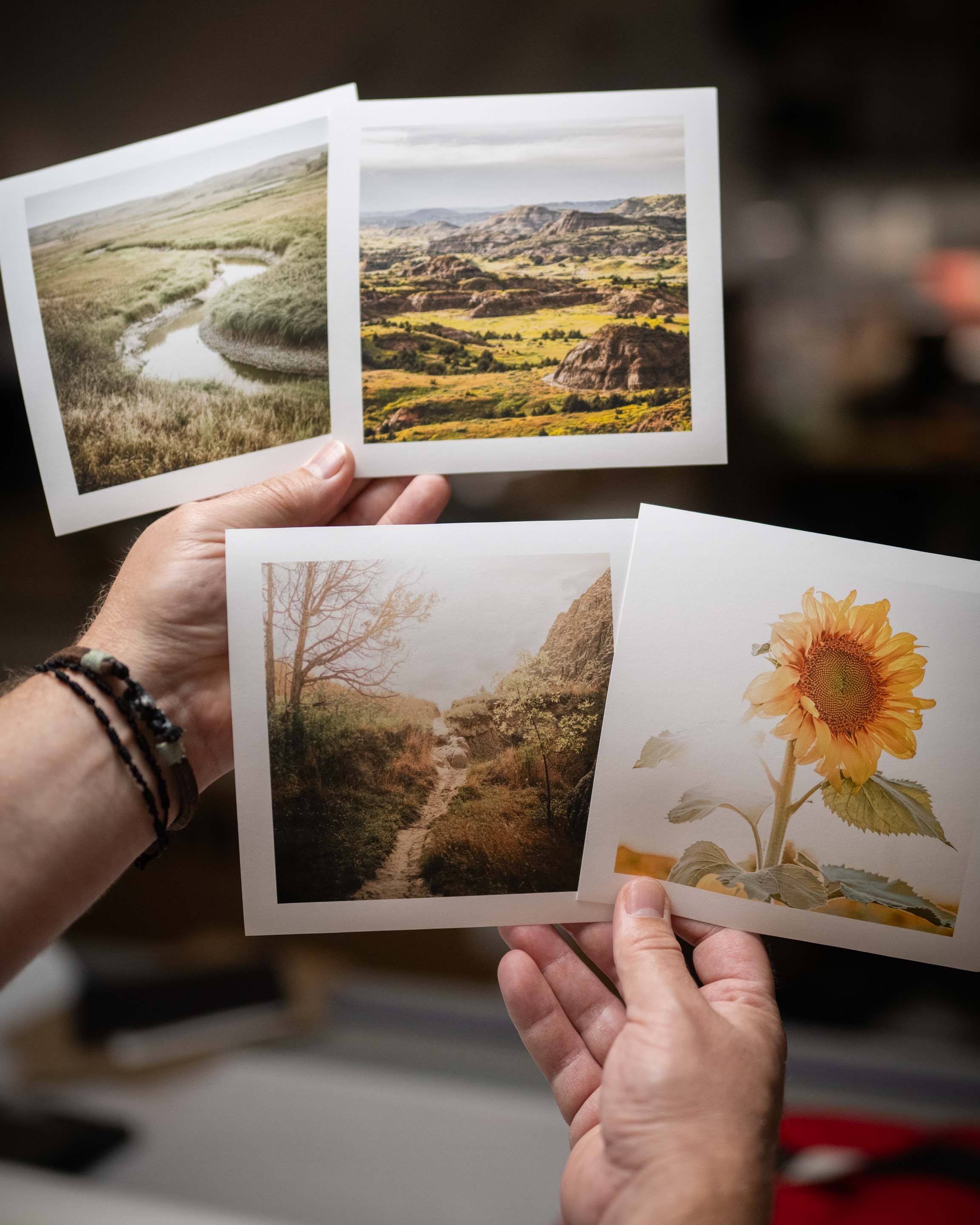
"Triumphant Dawn," captured at sunrise in the Badlands near Medora with a Phase One IQ3 100MP camera system and stitched together from 6 separate frames, presented as a 72-inch-wide acrylic facemount print with 2-in. linen liner and 2.5-in. black satin frame. Coming soon to the new print shop (currently in development).
Want More Like This?
If you appreciate this kind of behind-the-scenes documentation, or if you're drawn to what vast landscapes teach us about peace, resilience, perspective, and renewal, Boundless might be for you.
New issues arrive every Sunday through the library's opening day, July 4, 2026.
References
- RES Project Page, Theodore Roosevelt Presidential Library
- Matt McMahon, Snøhetta — Trim Tab / Living Future, December 2024
- Amy McCann, Community Relations Director, TRPL — NDSU Agriculture Impact Stories, November 2024
- RES Project Page, Theodore Roosevelt Presidential Library — 140,000 native plugs on the green roof
- Jenn Carroll, Manager of Sustainability, TRPL Foundation — Yale Climate Connections, February 2025
- JE Dunn Construction blog, November 2025
- Ben Geaumont, Range and Wildlife Scientist, NDSU Hettinger Research Extension Center — NDSU Agriculture Impact Stories, November 2024
Boundless is the weekly newsletter of photographer Chad Ziemendorf who uses a camera to create visual anchors in an accelerating world. Each issue explores what vast landscapes and landmark human endeavors teach us about peace, resilience, perspective, and renewal. Currently documenting the Theodore Roosevelt Presidential Library through opening day, July 4, 2026.
All content and images © Chad Ziemendorf. All rights reserved.
Share:
Boundless No. 00010 // Art Is Saying Stop
Boundless 00012 // There Will Be Signs