
Documentation Span
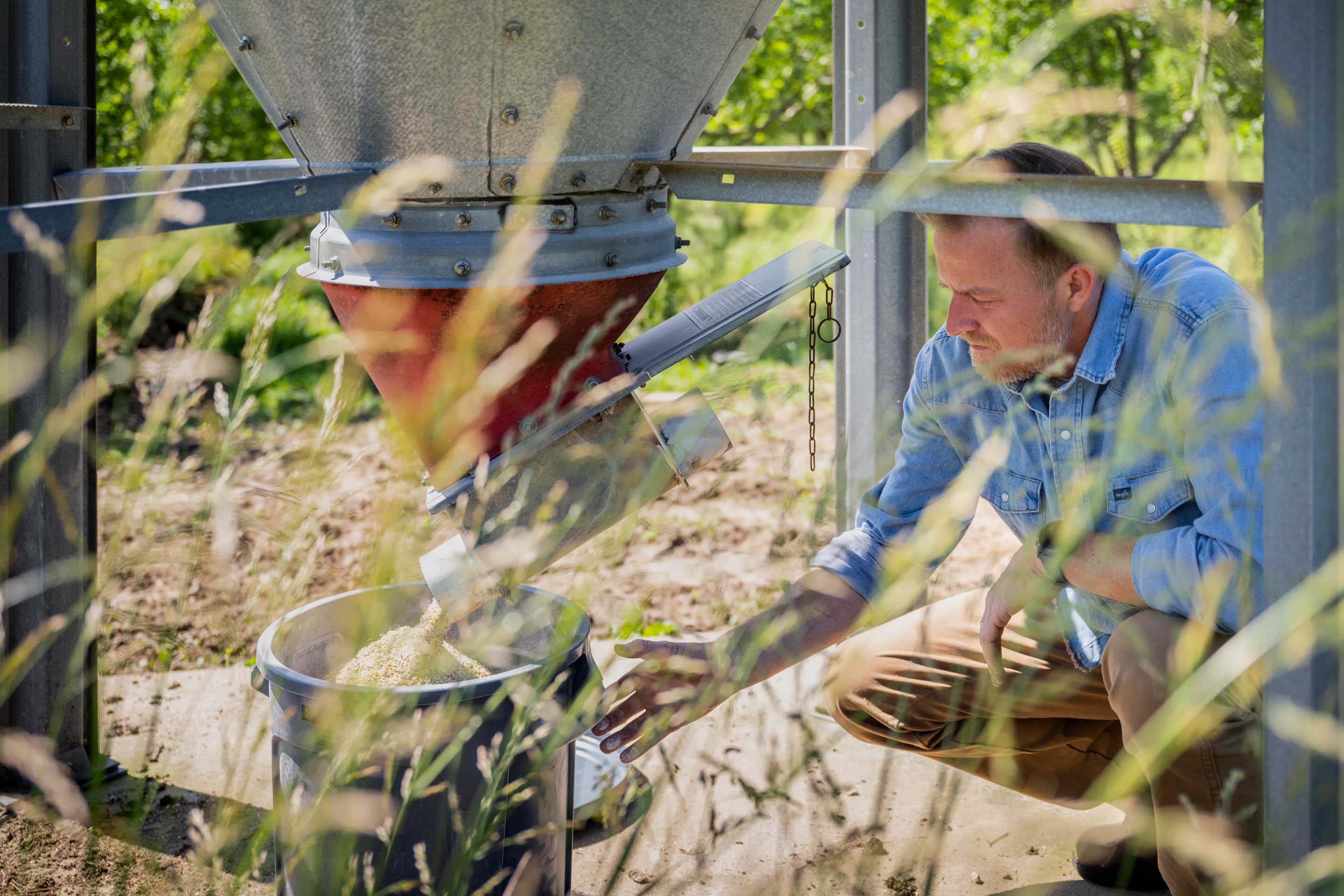
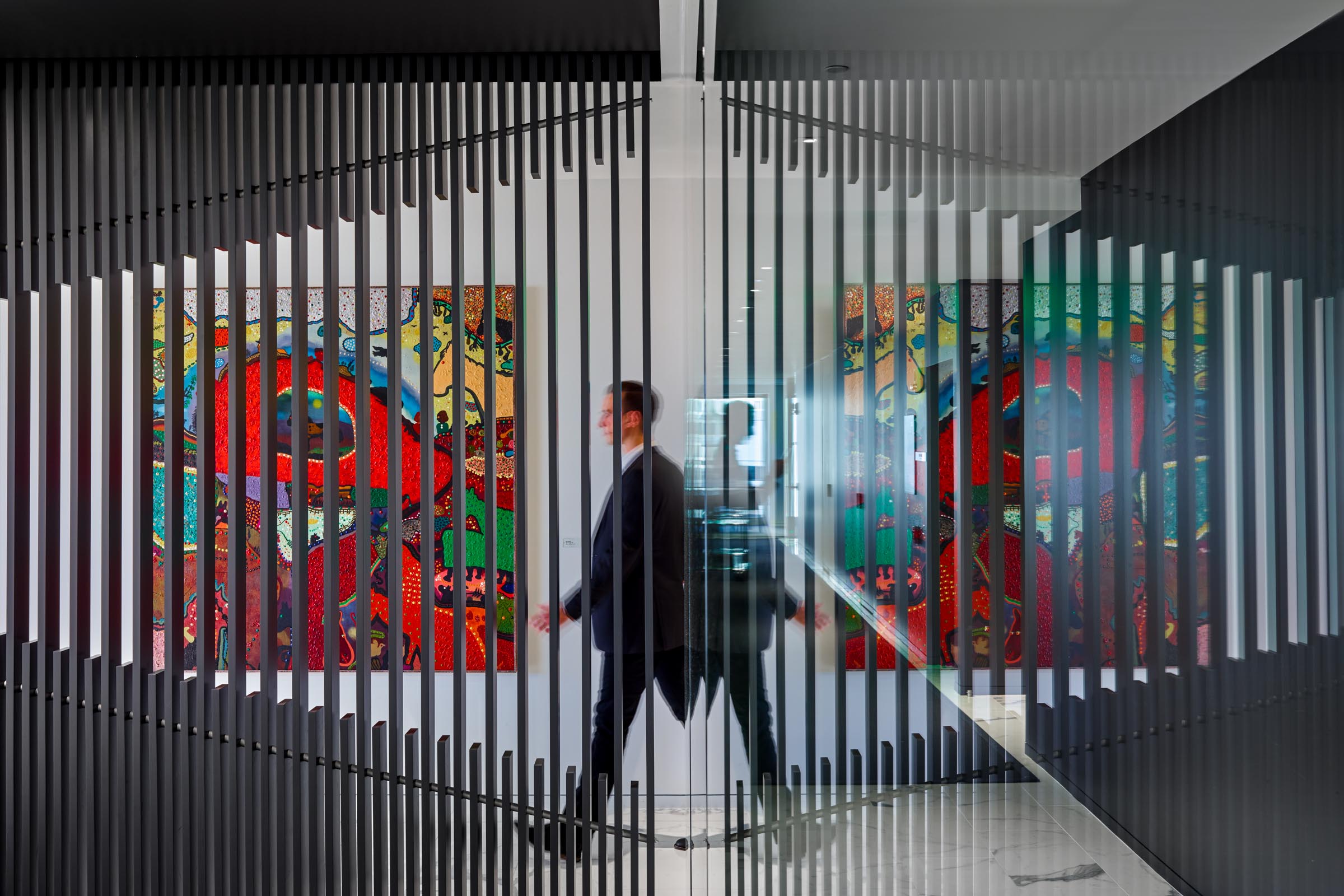
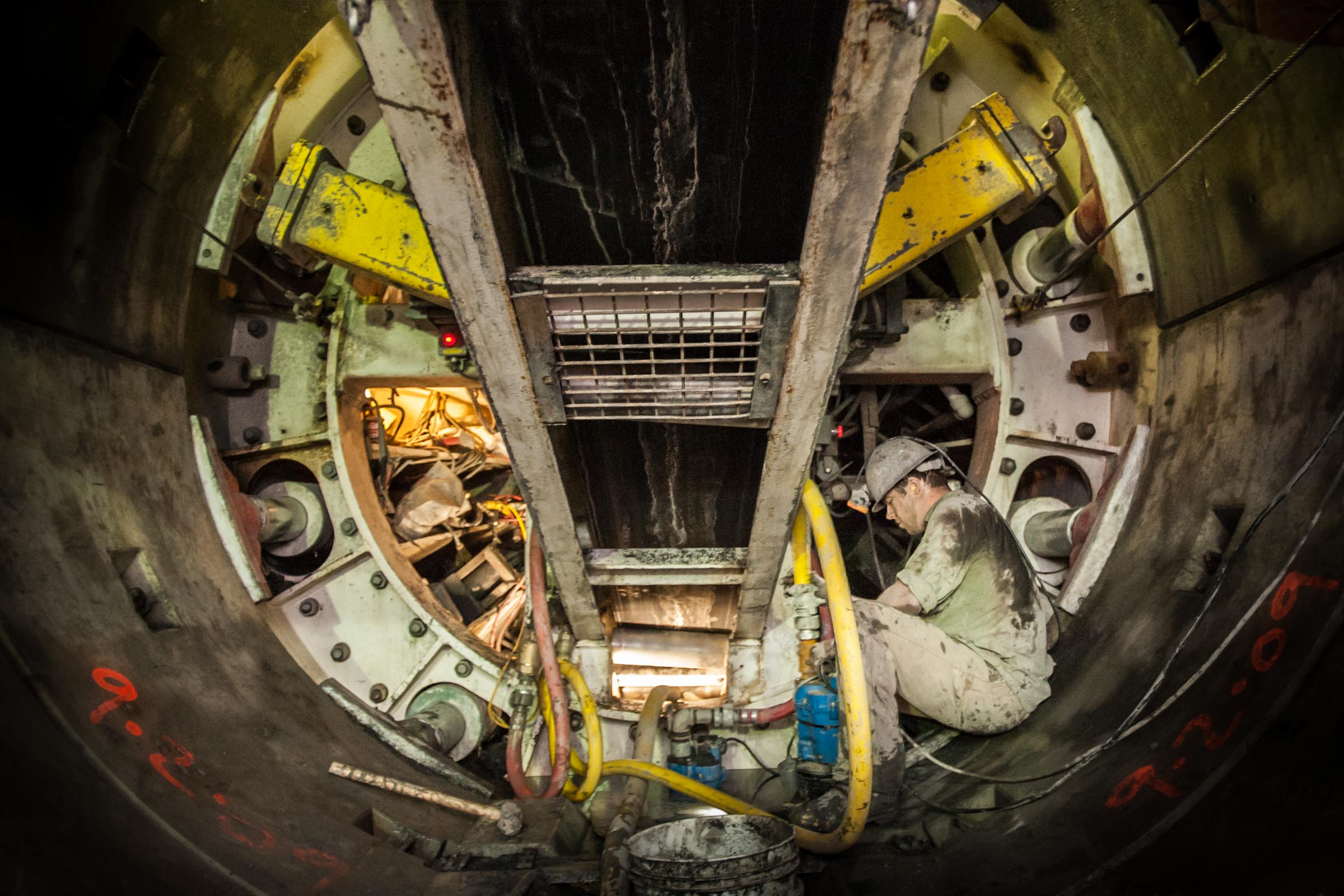
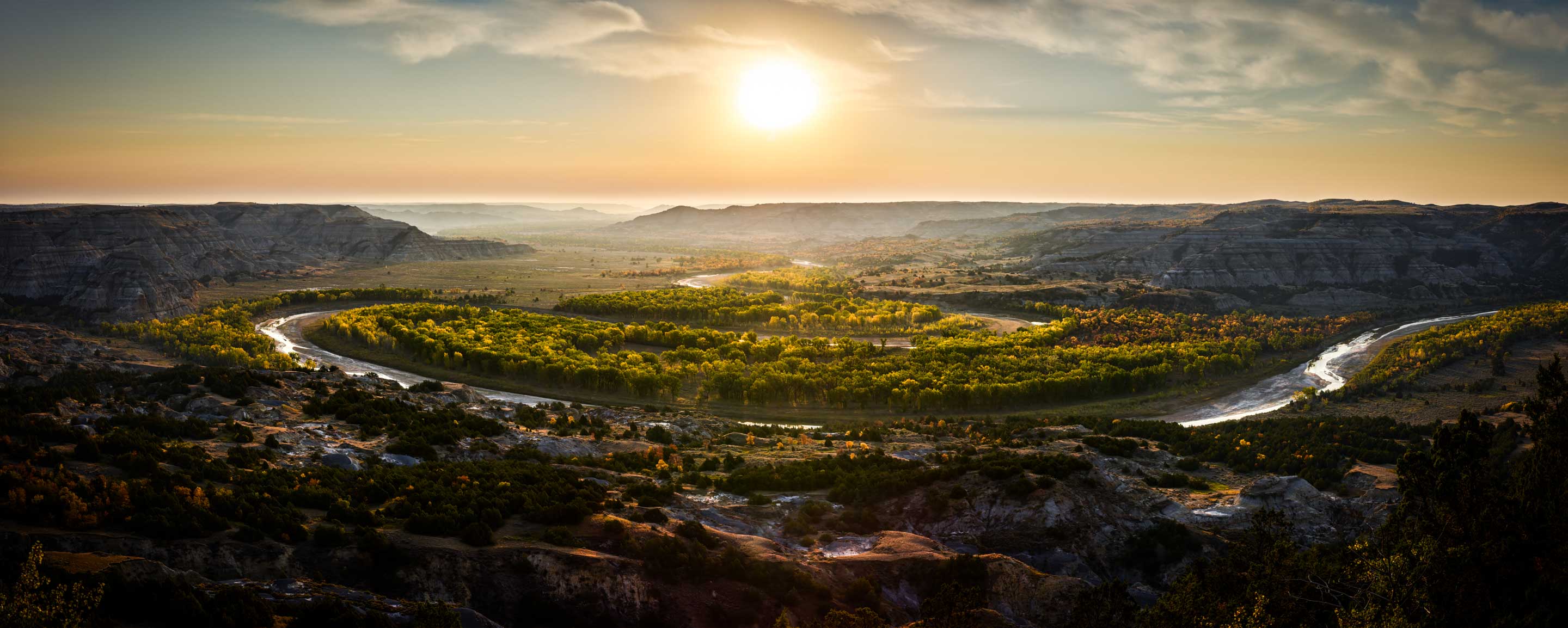
Images Captured
Site Visits
Local Contractors
Geothermal Wells
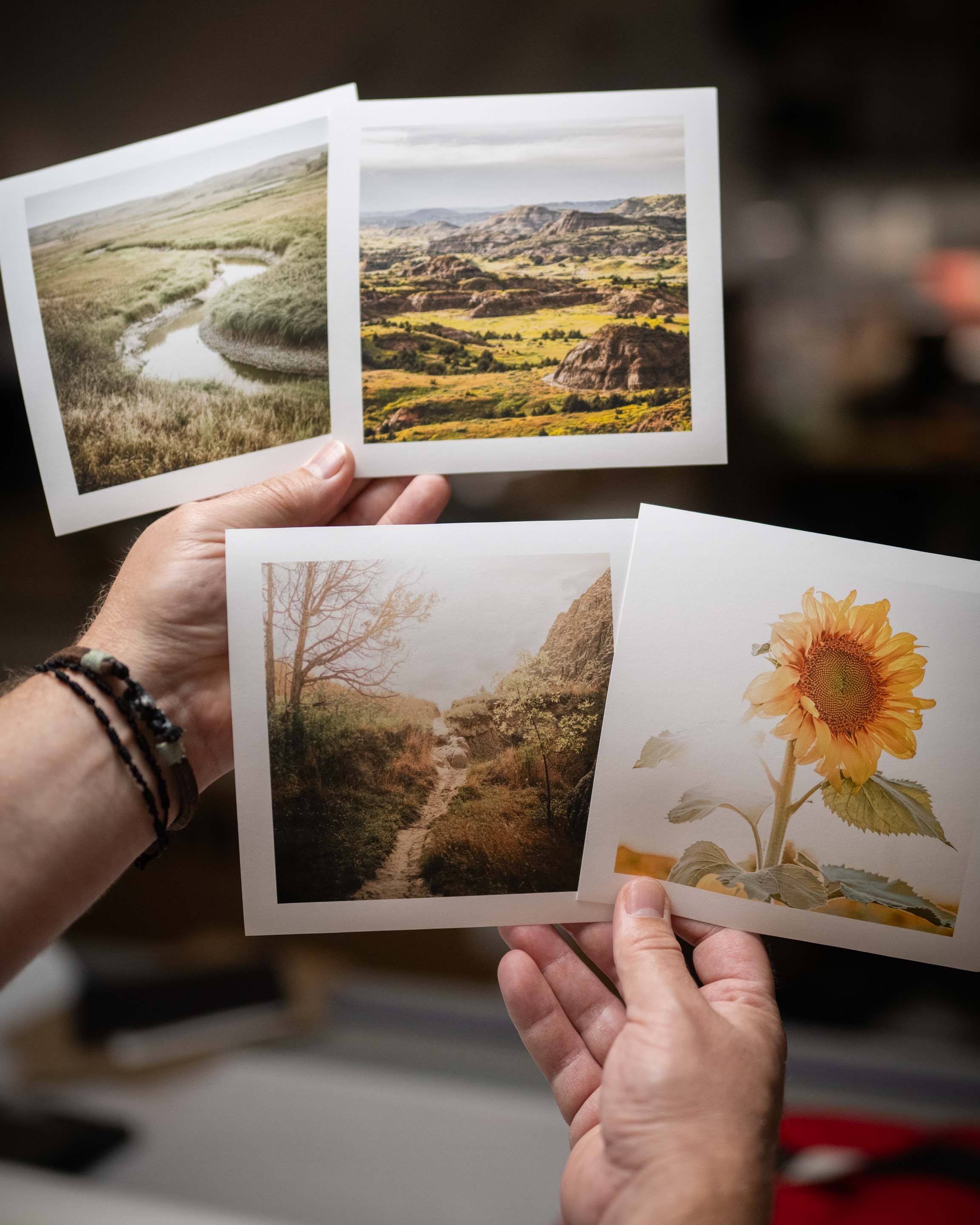
Native Plants
My comprehensive approach captures both monumental engineering achievements and intimate human moments - creating a strategic visual archive that accelerates fundraising, validates construction excellence, and preserves this historic undertaking for future generations.


Where Transformation Began
In 1884, Theodore Roosevelt lost his wife and mother on the same day. Devastated, he fled to the North Dakota Badlands seeking solitude. What he found instead was transformation.
"If it had not been for my years in North Dakota," he later wrote, "I never would have been President."
The landscape that healed Roosevelt became his life's work. He established America's first national parks, launched the conservation movement, and protected 230 million acres of wilderness. Now, on America's 250th anniversary, that legacy is being honored in the place where it began.
"This is not a museum with only artifacts under glass. It is meant to be an experience. There's no point in building a presidential library to a president who has been gone for over 100 years unless you're going to do something dynamically different and for the future."
- Ed O'Keefe, CEO, Theodore Roosevelt Presidential Library
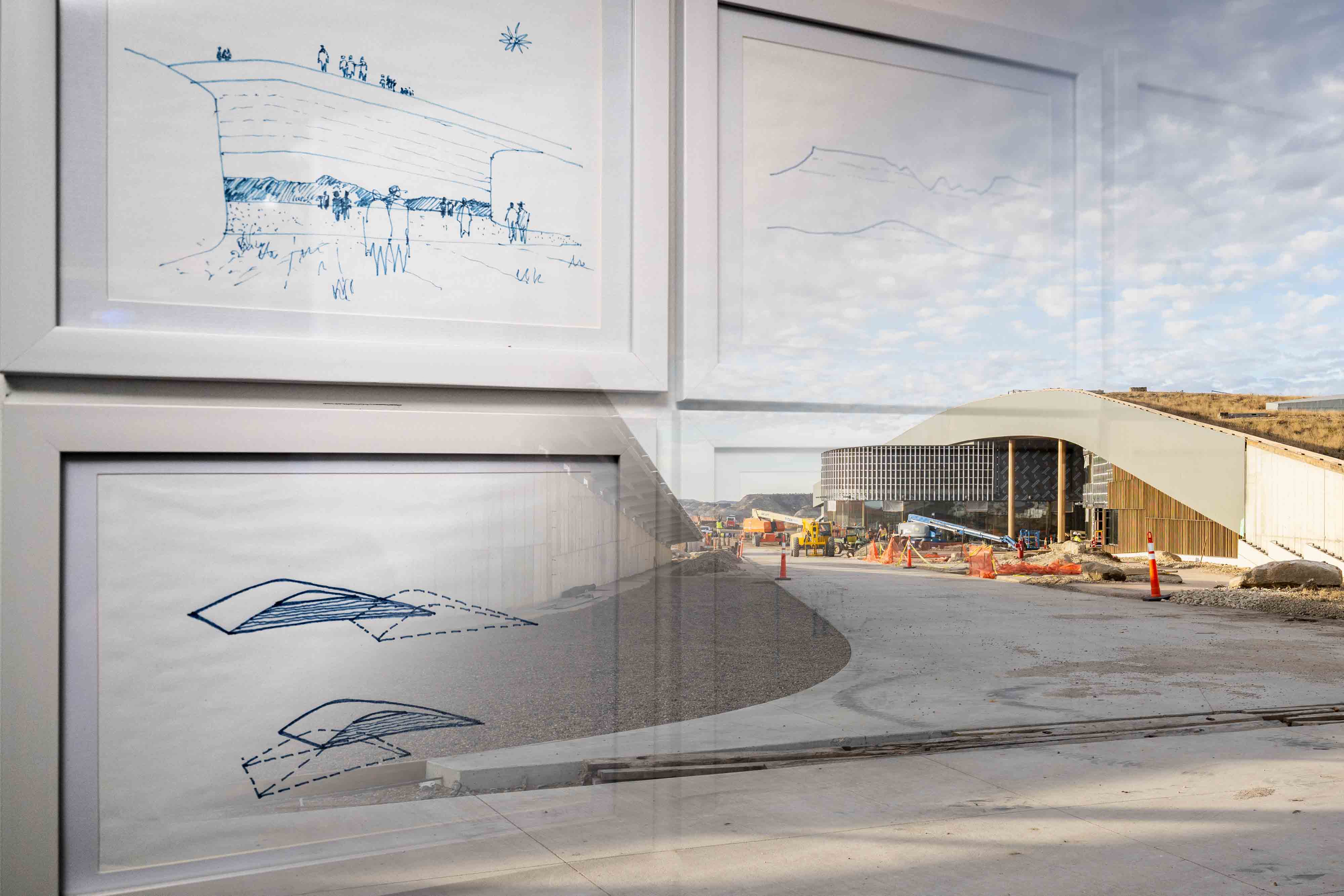
A Building That Emerges From the Land
Snøhetta's design didn't impose on the Badlands - it emerged from them. The team moved the entire building from the hilltop crest to the bluff's edge, preserving the pristine prairie visitors would experience before encountering the library.
The roofline mimics the rolling hills. One end terminates at ground level, so native grasses flow over the structure like a blanket settling into the earth. The centerpiece rammed earth wall - North America's first curved rammed earth structure - echoes the stratified layers visible in every Badlands butte.
"Theodore Roosevelt was an incredible reader of books—he read thousands of books in his lifetime, more than anyone could possibly imagine. So we decided that the landscape can be a library. A Presidential Library could be the actual landscape that you would first learn about his life and his beliefs from."
- Craig Dykers, Founding Partner, Snohetta
WHAT I CAPTURED
Comprehensive Visual Documentation
Over three years, I documented every significant phase of this Legacy Project - not just the building, but the land, the craft, and the people who made it possible.
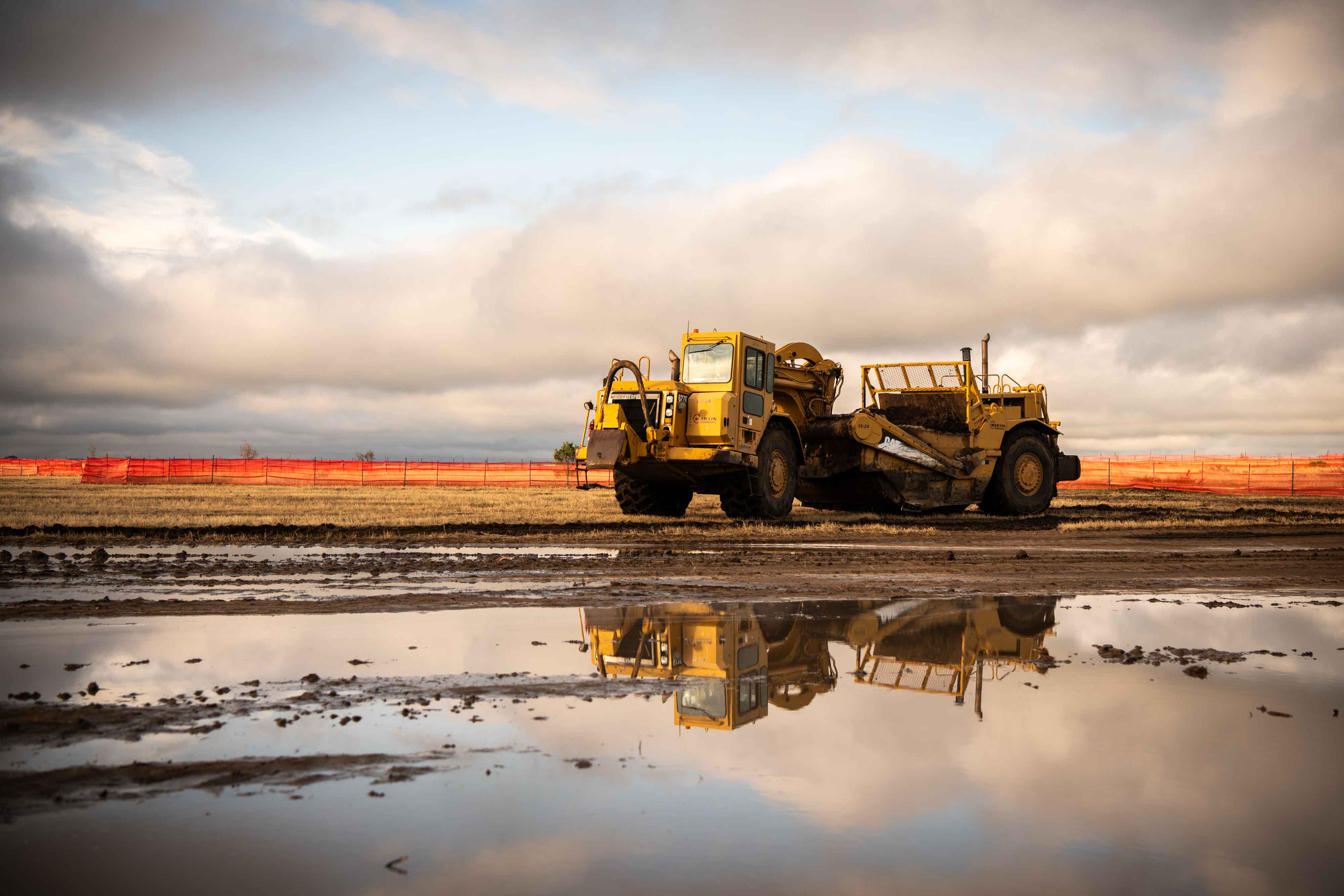
Site Preparation
Before a single foundation was poured, the team faced a fundamental question: how do you build on land this significant without destroying what makes it significant?
The answer required treating the earth itself as a living asset.
Preserving the Living Skin
Martin Construction began the site work in 2023, but this wasn't typical excavation. Their first task was carefully scraping and stockpiling the native topsoil - the living skin of the prairie that had been accumulating organic material, microorganisms, and seed bank for generations. Over 90,000 cubic yards of earth would eventually be moved, but that precious topsoil was preserved separately, stored nearby like a surgical team banking healthy tissue.
Months later, that same topsoil would return to blanket the library's living roof, carrying with it the biological memory of this place. Seeds dormant in that soil would germinate on the rooftop, creating continuity between what was and what will be.
Building to the Standard
This approach directly supports the project's Living Building Challenge certification - the world's most rigorous sustainability standard. The LBC's "Place" petal requires projects to demonstrate deep respect for their site's ecology. By preserving and reintegrating the native topsoil, the team ensured the building wouldn't just sit on the Badlands - it would grow from them.
Grading for Integration
The earthwork also established the building's relationship to the terrain. Snøhetta's design called for one end of the roof to terminate at ground level, allowing prairie grasses to flow over the structure. Achieving that integration required precise grading that Martin's crews executed across the rolling topography.
It's dirt work with intention - honoring both Roosevelt's conservation legacy and the land that transformed him.
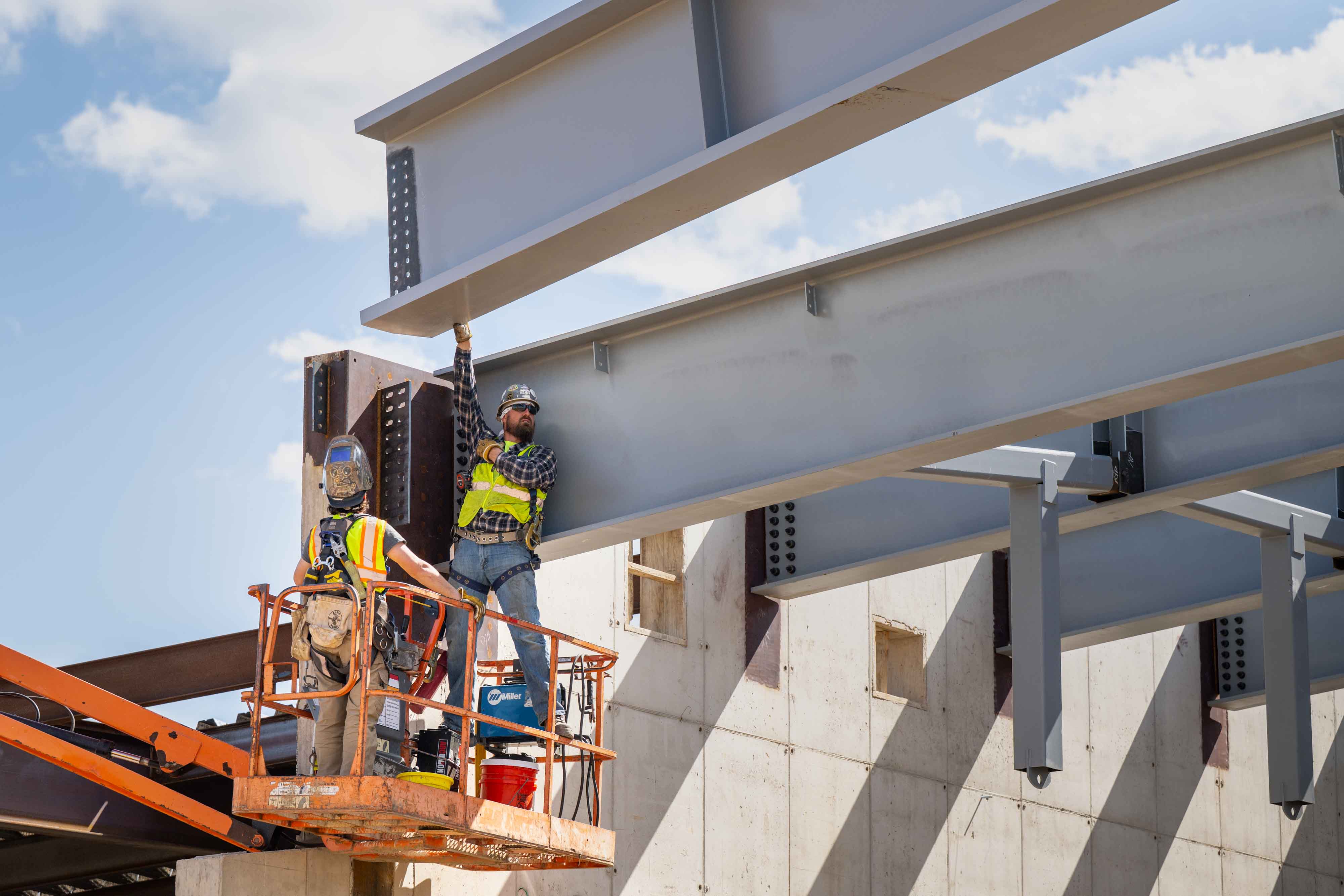
Structural Systems
The structural approach for the Theodore Roosevelt Presidential Library represents a deliberate departure from conventional construction - a hybrid system where steel and mass timber work together to achieve both performance and philosophy.
Steel Framework
True North Steel sourced the structural steel, with Innovative Builders out of Alexandria, MN handling installation. Their work established the primary load-bearing framework - the bones that would support the building's ambitious curved forms and cantilevered sections.
But steel alone wasn't the answer.
Mass Timber Integration
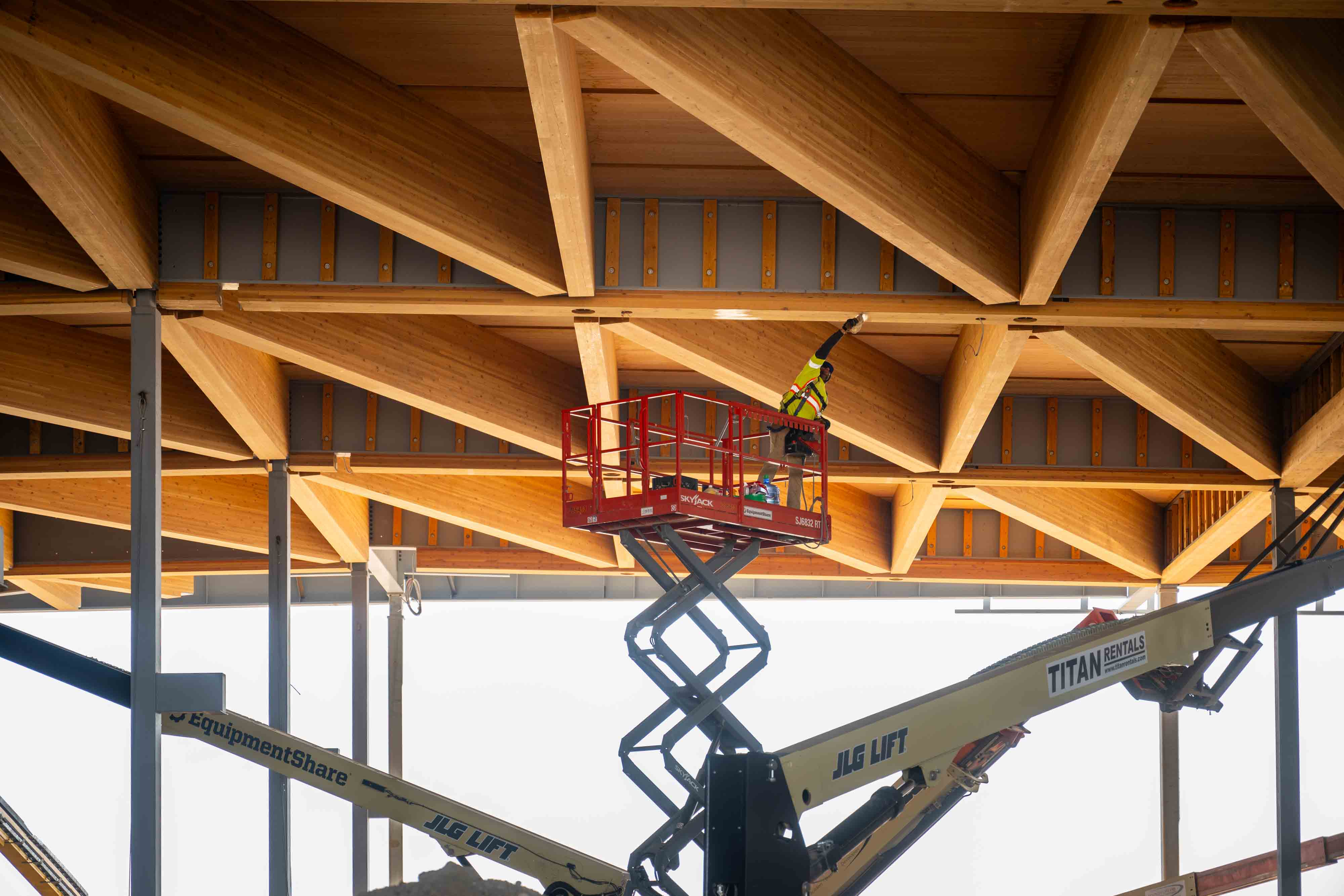
Mercer Mass Timber supplied over 1,800 cubic meters of engineered wood - a carbon-storing alternative to concrete and steel that gives the interior its warm, organic character. Seagate's crew then brought those massive beams to life, threading timber through steel in a structural dance that balances strength with sustainability.
As JE Dunn's Project Manager Trever Leingang explained: "Mass timber allows the building to feel warm, natural, and connected to the surrounding landscape. It's an embodiment of Roosevelt's belief in preserving and wisely using natural resources."
Why It Matters
Mass timber isn't just aesthetic - it's strategic. Unlike concrete and steel, which release carbon during production, timber sequesters it. Every beam in this building represents carbon pulled from the atmosphere and locked in place for the structure's lifespan.
For a presidential library honoring the father of American conservation, the material choice isn't incidental. It's the message made physical.
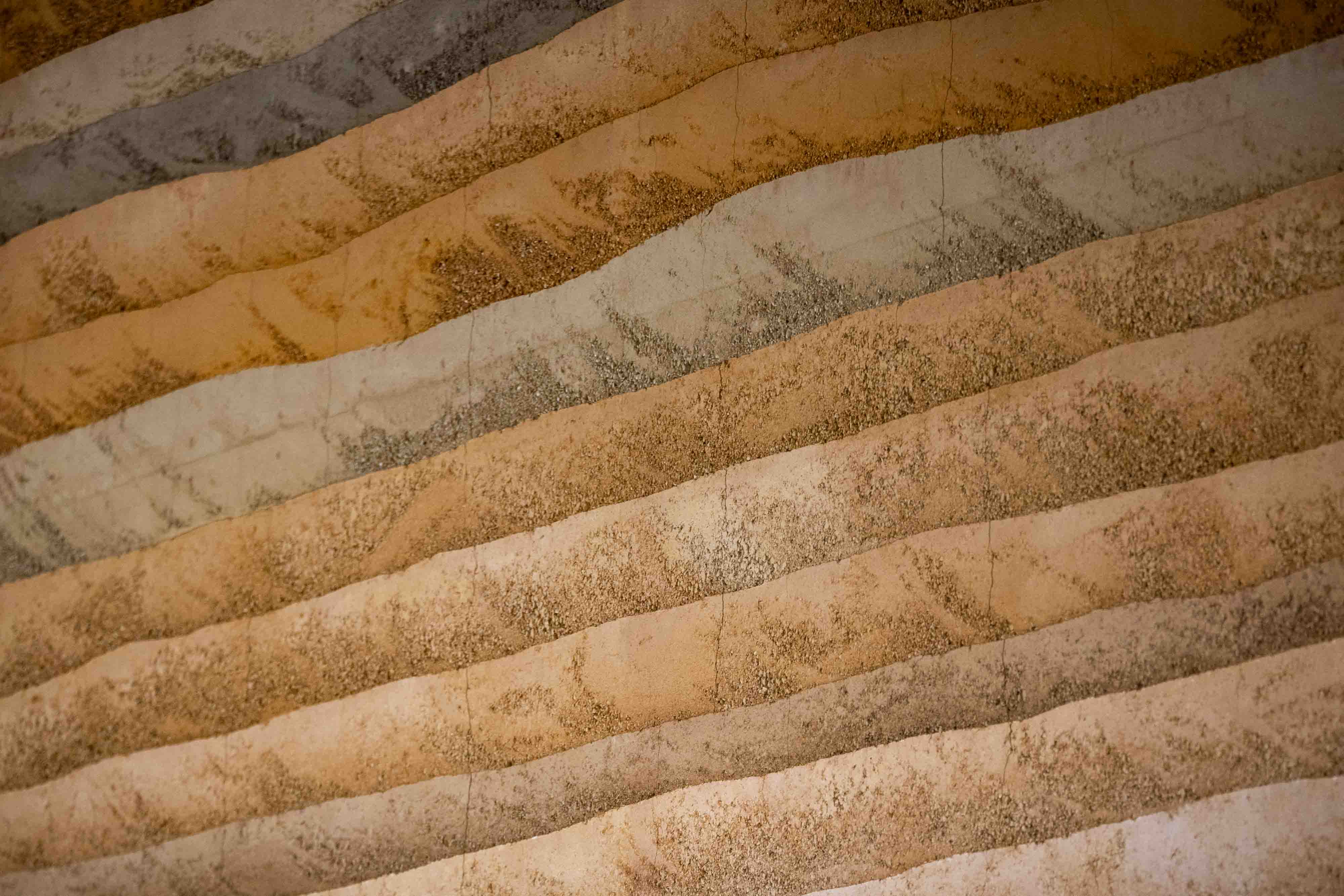
Architectural Details
Every material choice in this building tells a story about place. But nothing embodies that philosophy more than the centerpiece of the main hall.
The Rammed Earth Wall
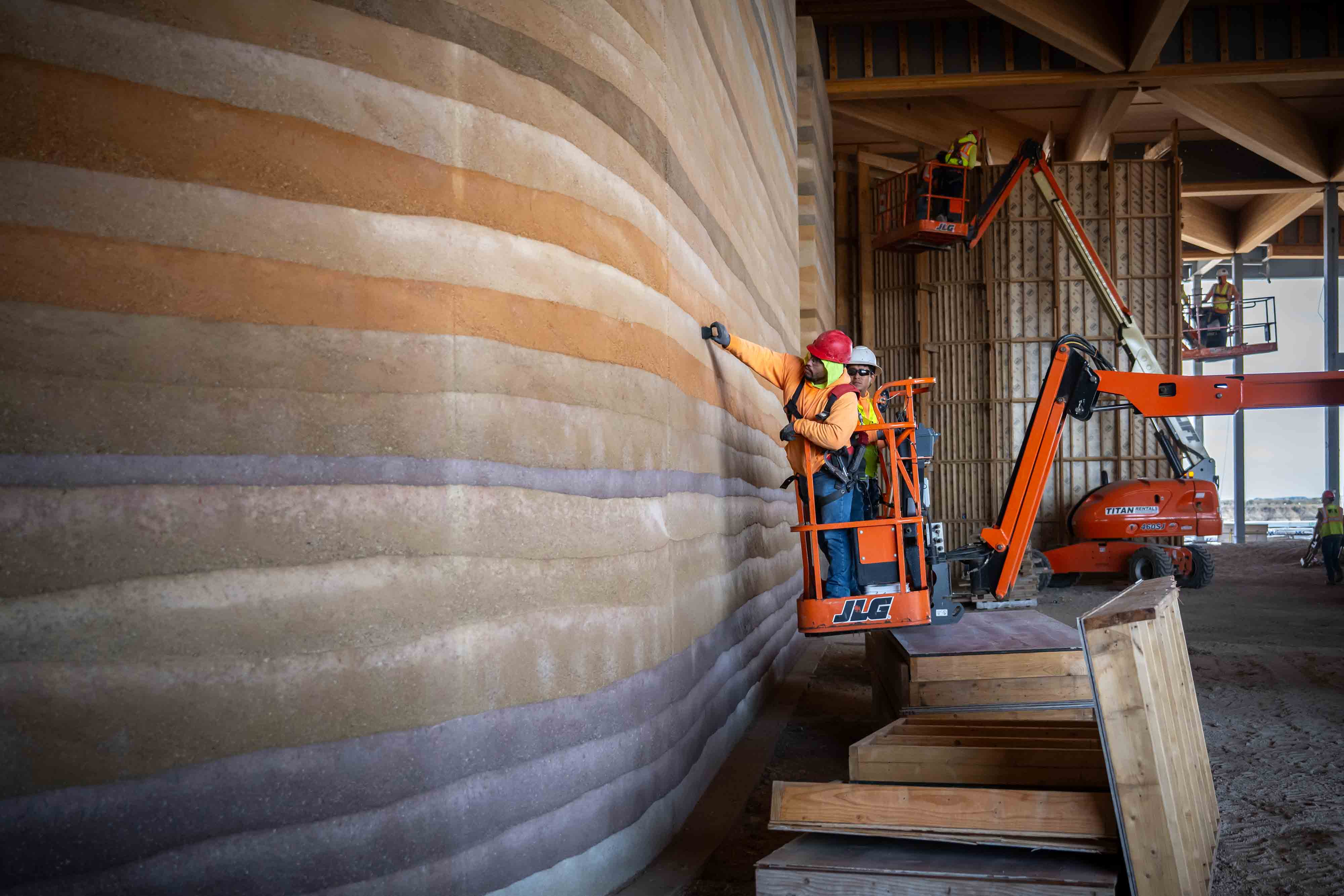
Rising 30 feet toward exposed timber panels and stretching 240 feet across the building's main hall, the rammed earth wall is North America's first curved structure of its kind.
Winn Construction spearheaded the installation, working with a specialized rammed earth consultant to master a technique dating back to 5000 B.C. The process involves compressing layers of a specialized cement-soil mix, creating horizontal striations that bear a remarkable resemblance to the sedimentary layers visible in every Badlands butte.
As Snøhetta's Aaron Dorf told Fast Company: "We were looking to create a building that is of the place. The surrounding landscape is defined by layers and layers of earth - it's profoundly beautiful."
Material as Message
The wall's surface is intentionally rough-hewn - pocked and porous, with uneven layers in an earthy palette of sand, stone, mud, and dust. It's tactile in a way most public buildings avoid.
Ed O'Keefe described it simply: "It's an alternative to concrete and steel and it's absolutely gorgeous. It's a beautiful natural material."
A Circular Material
Rammed earth isn't just beautiful - it's sustainable by nature. If ever demolished, it returns to the ground it came from. For a building pursuing Living Building Challenge certification, this circularity matters. The wall doesn't just reference the Badlands aesthetically - it participates in the same material logic.
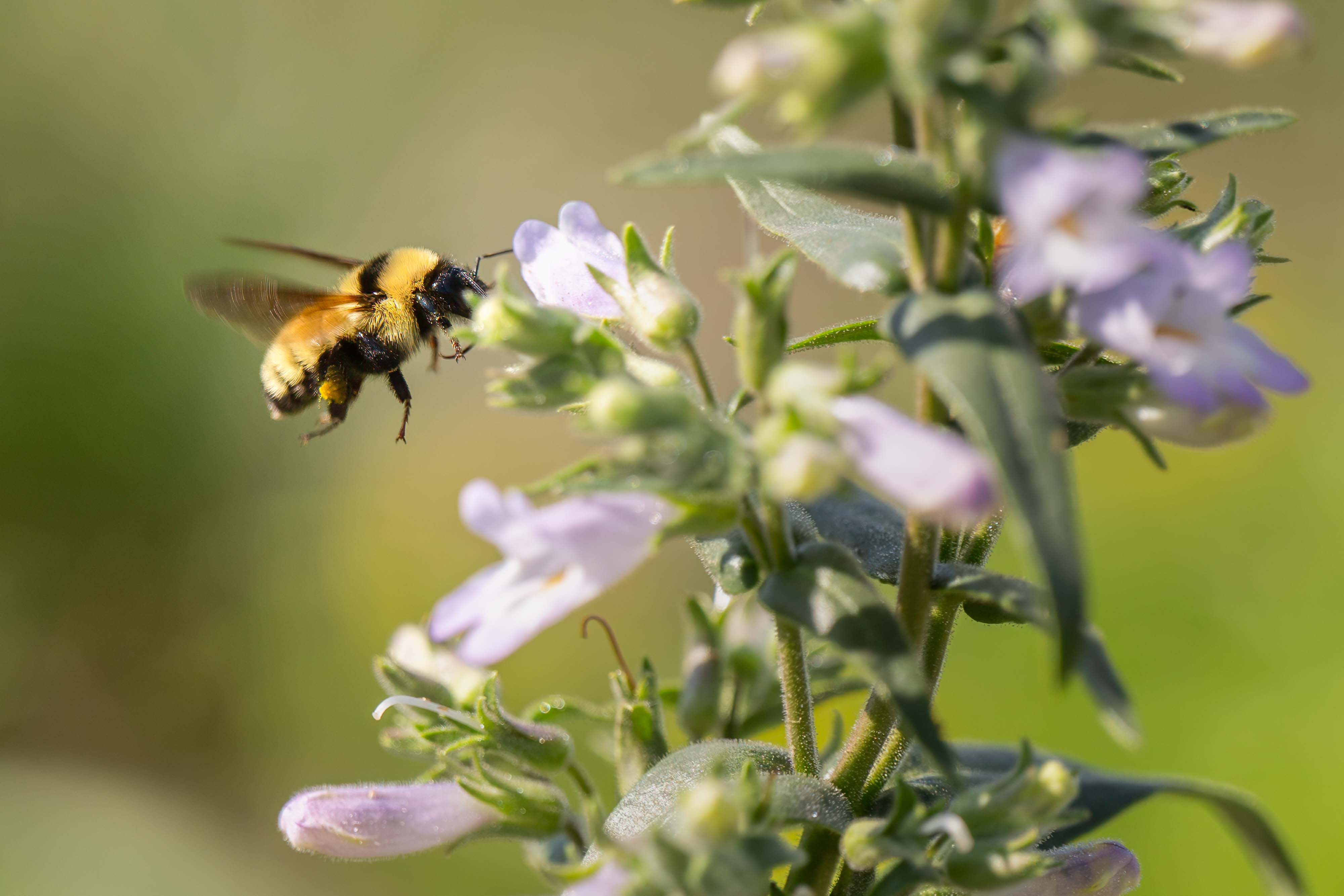
Living Systems
This isn't landscaping. It's ecological restoration at scale - a deliberate effort to rebuild native habitat while creating the building systems that will sustain the library for generations.
The Native Plant Project
The American Prairie is the most endangered biome on the continent. The TR Library is helping restore it.
The effort began with volunteers hand-collecting seeds from 63 native species across the region. Resource Environmental Solutions then cultivated those seeds into over 400,000 plant plugs at specialized nurseries in Wisconsin before trucking them back to Medora.
Each plug was manually arranged in authentic patterns mimicking natural prairie distribution, then hand-planted across the site. 130,000 of those plugs now grow on the living roof itself.
As Snøhetta's Matt McMahon noted: "Almost everyone on the design and owner core teams has spent time doing seed collection out in the Badland landscape. This connects us all to this project and place in a deep and personal way."
Many of these species haven't grown on this exact site in over a century. Now they're home again.
The Living Roof
The roof functions as infrastructure. Planted with native grasses and forbs in that preserved topsoil, it manages stormwater naturally, provides habitat for pollinators, and helps insulate the building.
From certain vantage points in Theodore Roosevelt National Park, the building nearly disappears. The roofline mimics the rolling hills. The vegetation is continuous with the surrounding prairie.
Below Ground: Geothermal
Beneath the site, 216 geothermal wells reach 300 feet into the earth, providing heating and cooling through ground-source heat exchange. No fossil fuel combustion. No conventional HVAC systems fighting against North Dakota's temperature extremes.
Combined with on-site solar and daylighting strategies, these systems position the library to achieve net-positive energy, producing more than it consumes.
Conservation in Action
Jenn Carroll, the Foundation's Manager of Sustainability, put it directly: "With T.R.'s history being the conservation president, we felt like continuing that legacy was extremely important for our mission."
The library embodies that legacy in every system.
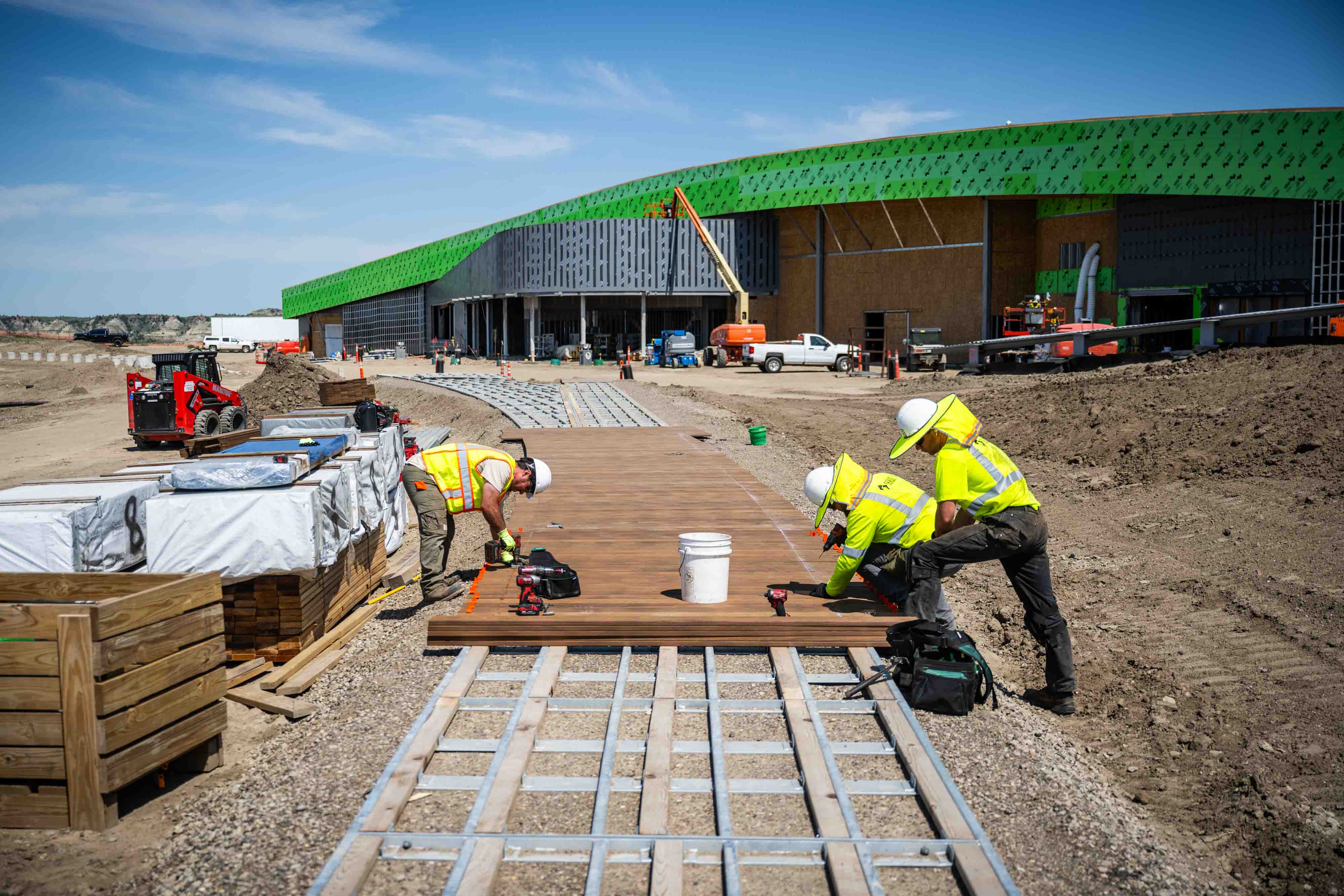
Landscape Integration
Snøhetta could have placed the building at the top of the bluff. The views would have been spectacular. The architecture would have dominated the skyline.
They moved it.
The Decision to Defer
Craig Dykers explained the thinking: "This is beautiful. Why would we want to ruin all of this? No matter how great the building is - I don't care if it's the most beautiful building in the world - you cannot replace the landscape that you're taking away from people's ideas."
The team relocated the entire structure from the hilltop crest to the bluff's edge. Visitors now experience pristine prairie first, then discover the building. The architecture arrives as a quiet presence rather than a proclamation.
Michelle Delk, Snøhetta's Partner of Landscape Architecture, framed it simply: "Being bold doesn't have to be loud. In many ways, we really just wanted to invite visitors to slow down and to start to notice this incredible place."
The Approach Sequence
The building settles into the grasslands of the butte, coming in and out of view as visitors make their way from the town of Medora. Delk described the intent: "The main building will welcome visitors like a polite host, rather than a performance unto itself."
A mile-long boardwalk extends from the library into the surrounding terrain, connecting to over 100 miles of trails including the Maah Daah Hey. The boardwalk lets visitors experience the Badlands the way Roosevelt did in 1884: on foot, at nature's pace, aware of every shift in terrain.
The TR Triangle
The library's location creates what planners call the "Theodore Roosevelt Triangle," connecting the library to Mount Rushmore to the south and Yellowstone National Park to the southwest. The library becomes a gateway to the Western National Parks system and the first presidential library affiliated with a national park.
Reading the Land
Delk sees the landscape itself as a text: "This landscape can be read. It allows for another level of reading than is ordinarily possible. You can see the evidence of the geologic eras and the histories of use are visible, too."
The library exists to help visitors read it.
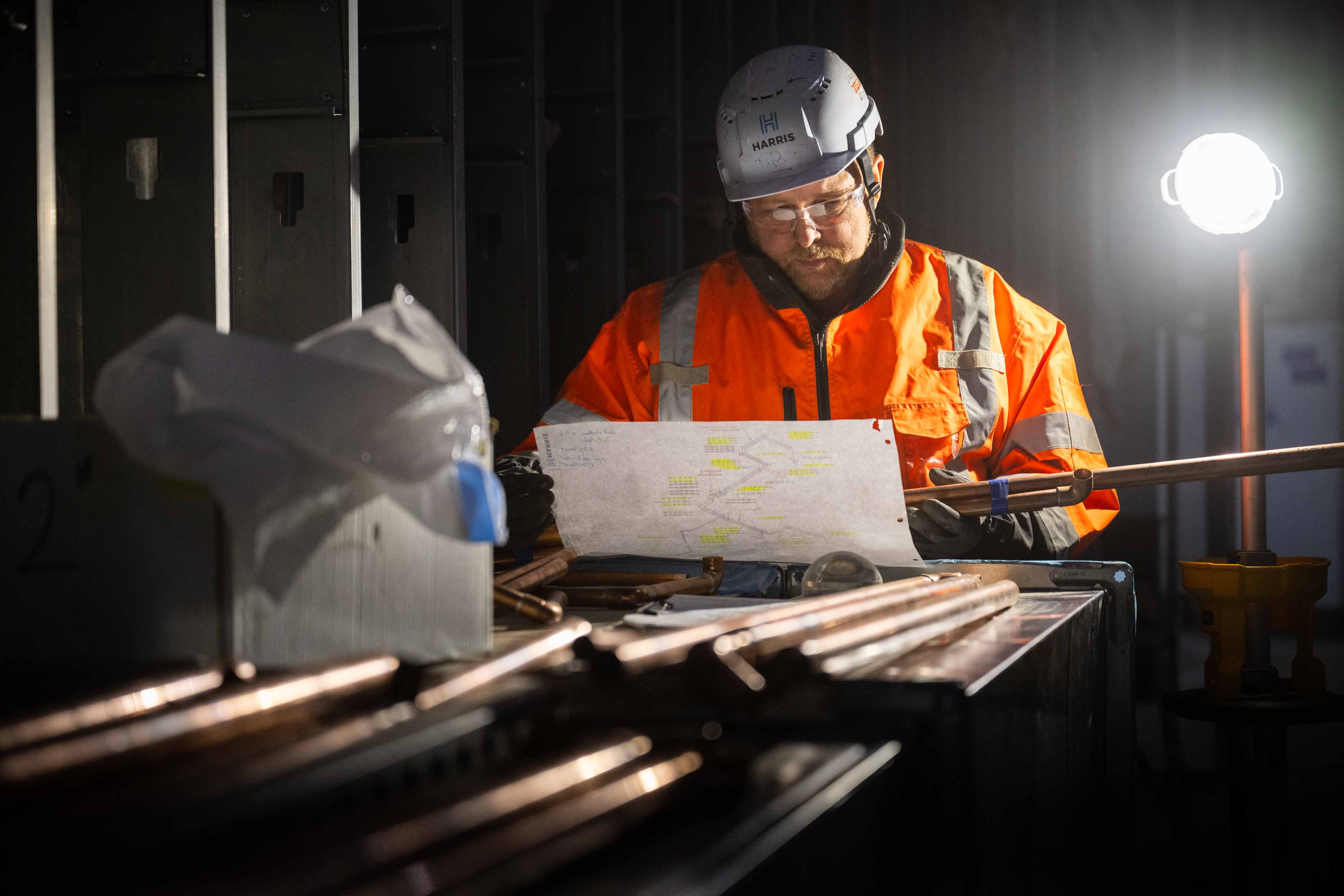
The Craftspeople
A $450 million landmark doesn't build itself. Behind every beam, every pour, every carefully placed plant plug are the hands of workers who understand what they're creating.
Local Roots
75% of the contractors on this project are North Dakota-based. This was intentional. The library belongs to this place, and the people building it belong here too.
JE Dunn Construction serves as general contractor, coordinating dozens of trades across a remote site with extreme weather, complex logistics, and sustainability requirements unlike anything most crews have encountered.
Steve Fore, JE Dunn's General Superintendent, captured the weight of it: "We're not just preserving history here; we're building history for someone else to preserve."
Learning New Craft
Many of these workers took on techniques they'd never attempted. Winn Construction, a regional concrete contractor, agreed to build North America's first curved rammed earth wall. They learned an ancient method and executed it at monumental scale.
Jenn Carroll, the Foundation's Manager of Sustainability, acknowledged what that required: "It's really important to note the willingness of Willie and his team to take on this piece of the project. We're incredibly grateful because this is such a big piece of what we're doing, and they were willing to learn this new craft."
Willie Winn called the opportunity "a privilege."
Generational Thinking
What strikes you on site is how many workers talk about their grandchildren.
Fore put it plainly: "I've got eight grandkids. I'm pretty proud of working on a project like this - something they can see for the rest of their, and hopefully into their kids' lives."
One contractor told his crew: "Our grandkids will bring their grandkids here." That changes how you set a beam, pour concrete, or seal a skylight.
Why It Matters
Project Manager Trever Leingang summarized the shared sense of purpose: "Knowing that we're contributing to a legacy that blends innovation with purpose is incredibly fulfilling, and working alongside a team of passionate craftspeople and visionary designers makes every challenge worthwhile."
These aren't just construction workers. They're the human element turning architectural drawings into a national landmark.
SELECTED WORK
Three Years in Images
A curated selection from over 10,000 photographs of this Legacy Project Docum documenting the construction of the Theodore Roosevelt Presidential Library. Learn more about my process →


THEN & NOW
From Prairie to Presidential Library
Drag to see the site's transformation from bare prairie to $450 million landmark.
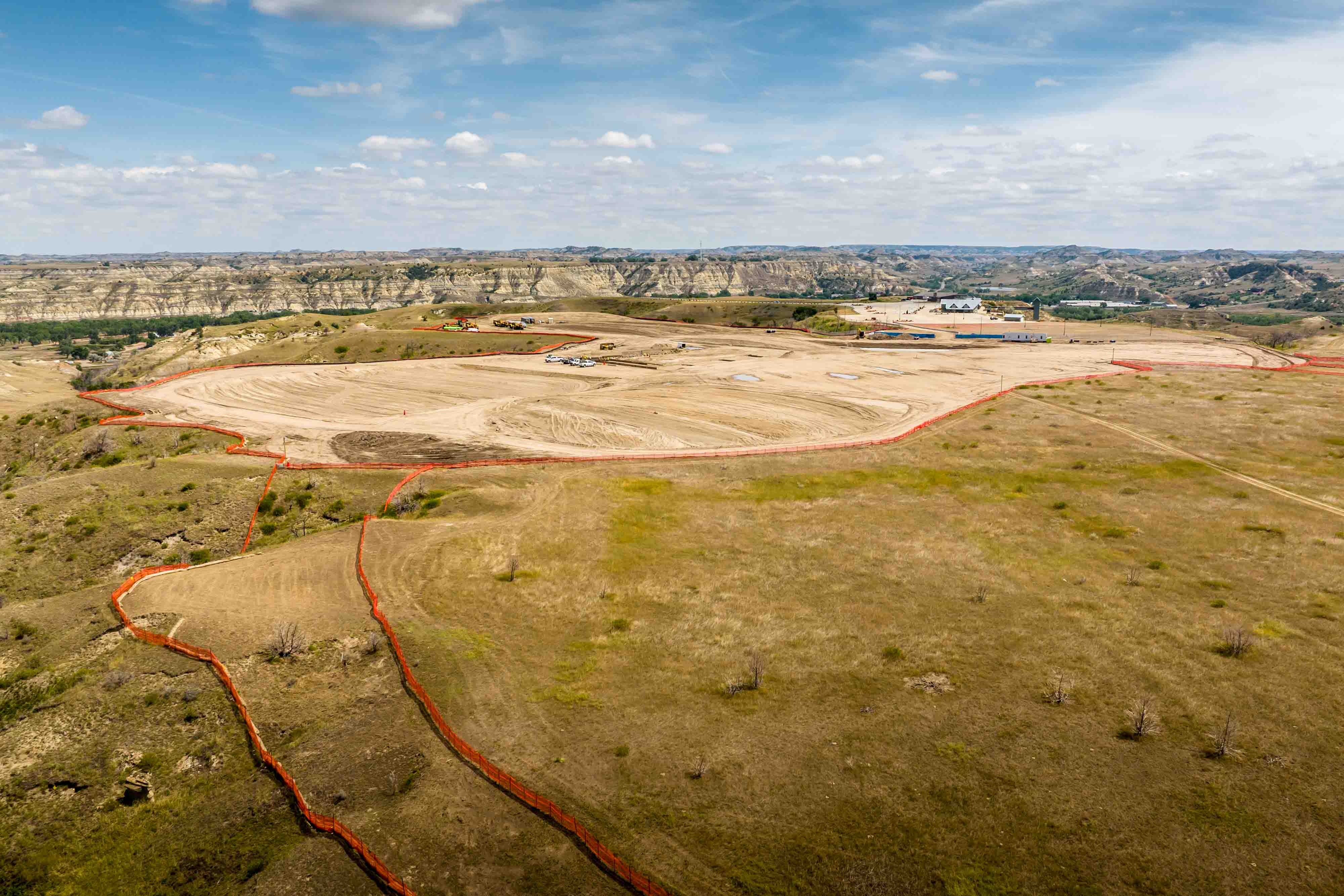
Year One
August 2023
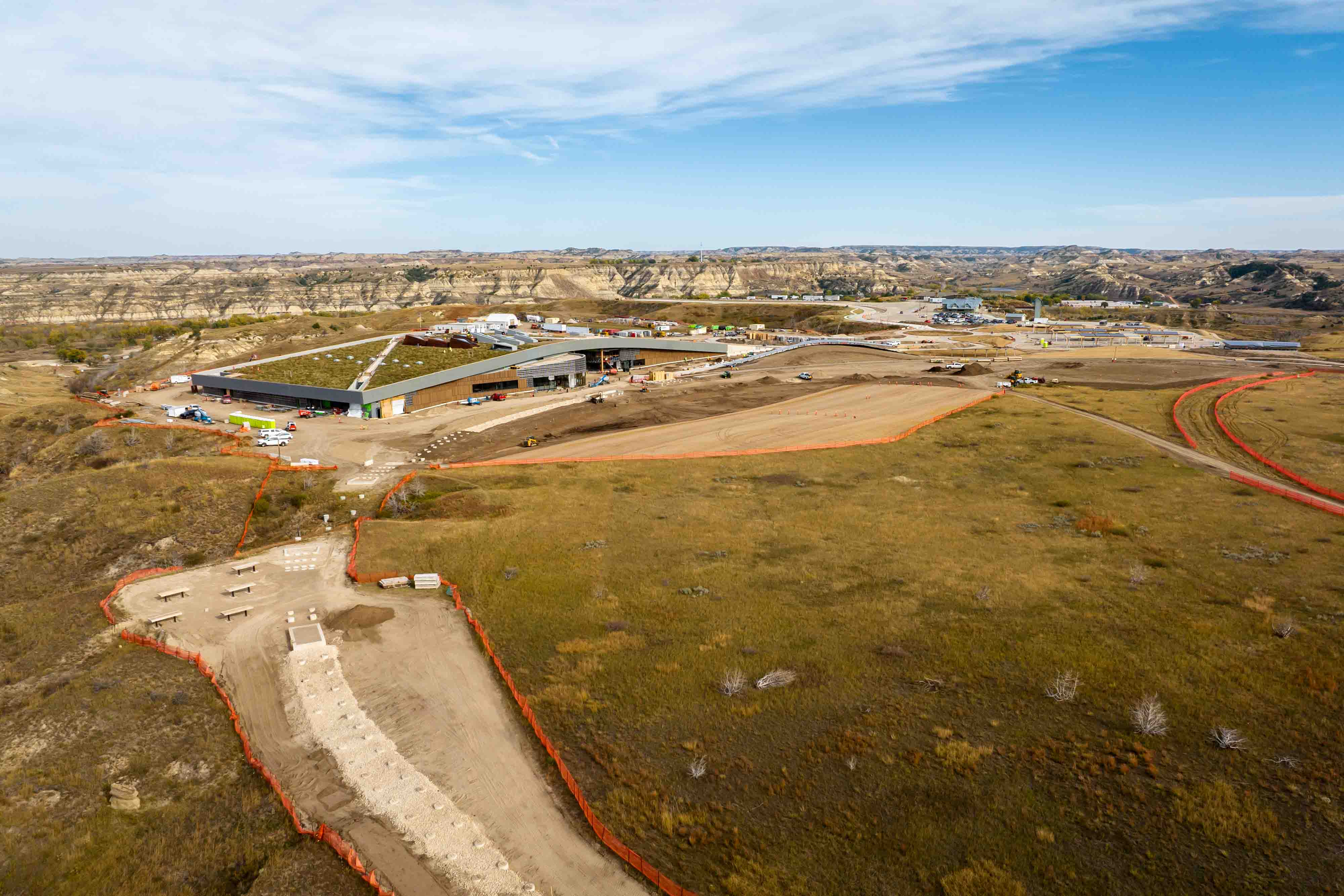
Two Years Later
October 2025
Documenting Tomorrow's Landmarks
Your Legacy Project
Every generation builds institutions that define their era and shape the future. These landmark projects - cultural institutions, educational facilities, infrastructure developments - deserve documentation that captures both their engineering excellence and human vision.
As your documentation partner, I bring the approach refined through my work with the Theodore Roosevelt Presidential Library to your transformative project. From groundbreaking through ribbon-cutting, I create visual assets that accelerate funding, engage stakeholders, validate progress, and preserve your project's enduring impact.
Currently accepting a limited number of Legacy Project Documentation partnerships for 2026-2028 projects exceeding $300 million.
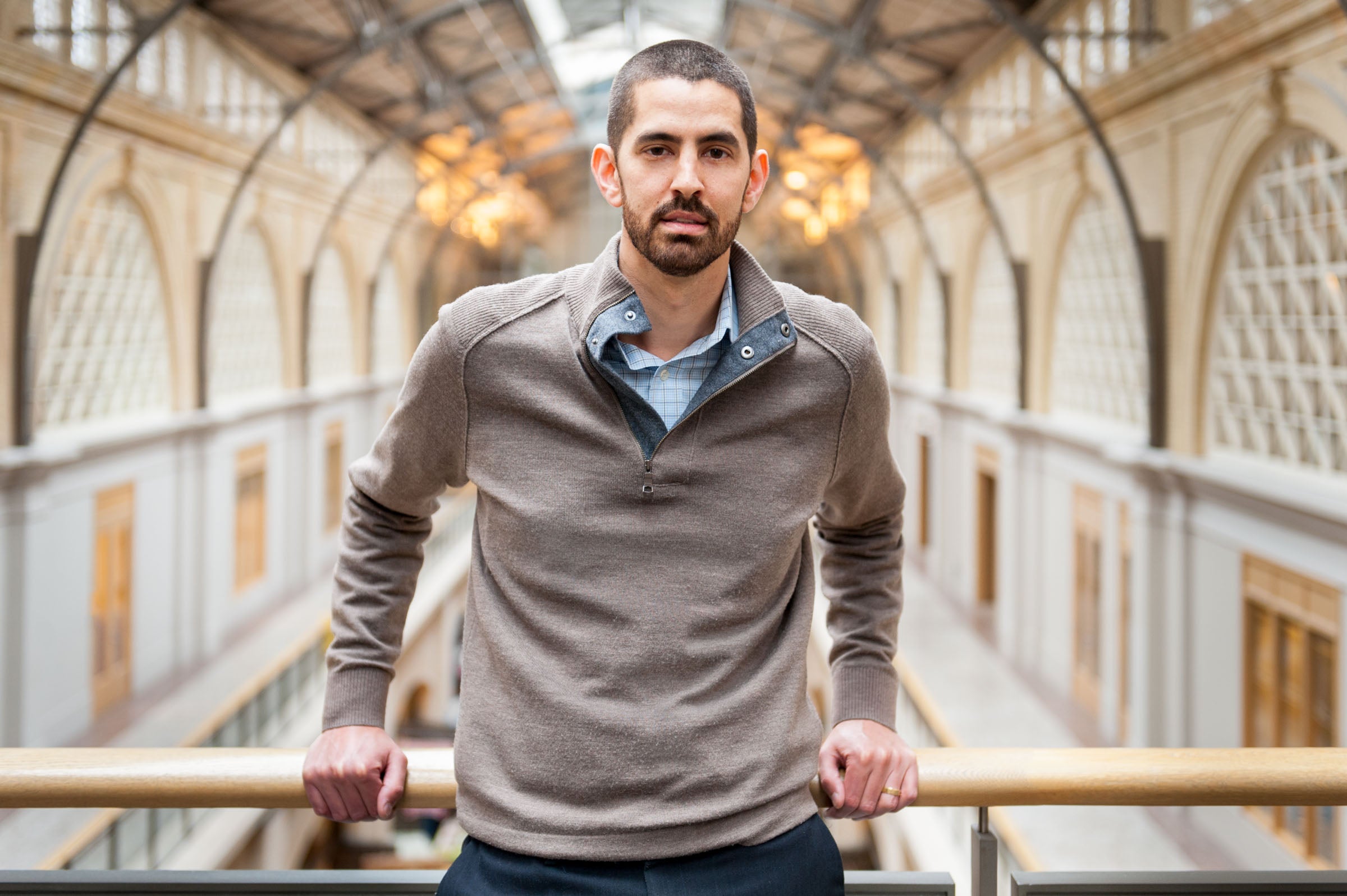
Chad - thank you for this! The work you do brings the humanity of the library to life - the craft and care, the contractors, client team, and designers have all committed to realizing this project.
— Matthew McMahonProject Director & Director of Landscape Architecture, Snøhetta
Explore More
My work spans diverse environments while maintaining a consistent approach to visual storytelling. Each portfolio reveals different facets of technical excellence and authentic narrative.